
Micro Drama and Mobile Games Are Converging, And Coins Are the Reason


Play the game
Happy Glass 2
There's a conversation that's been happening in gaming industry circles for the past year or so, mostly in podcast and newsletter form rather than splashy headlines, about a content category that didn't exist in any recognizable form five years ago and is now genuinely large enough that gaming companies are paying close attention to it. Micro drama — short, vertically-shot serialized fiction, episodes running two to five minutes each, built around cliffhangers engineered to make you want the next one immediately — started in China and has since spread fast enough into the US and other markets that apps built entirely around the format have climbed download charts in categories gaming companies used to consider entirely separate territory.
The reason gaming people are watching this closely isn't really about the video content itself. It's about the monetization mechanic underneath it, because that mechanic is, structurally, almost identical to something gaming has been running for over a decade.
Most micro drama apps monetize through a pay-per-episode model dressed up as a coin system. You watch the first few episodes of a series free, get to the cliffhanger right when the story gets genuinely tense, and then hit a wall — the next episode costs coins, which you either buy with real money or earn through smaller actions like watching an ad or completing a daily check-in. That's not a new invention. It's the same coin-gated progression loop mobile games have been refining since free-to-play first took over the App Store charts, just pointed at narrative content instead of game levels. The cliffhanger is doing the same job a difficult level does in a gacha game — creating a moment of genuine desire right before the paywall, rather than asking for payment at a neutral, low-tension moment when the ask feels arbitrary.
What's actually interesting, and what the more thoughtful industry conversation around this has started focusing on, isn't just that drama platforms borrowed a gaming mechanic. It's what happens when the two categories actually merge into a single coin economy rather than running two separate, parallel ones.
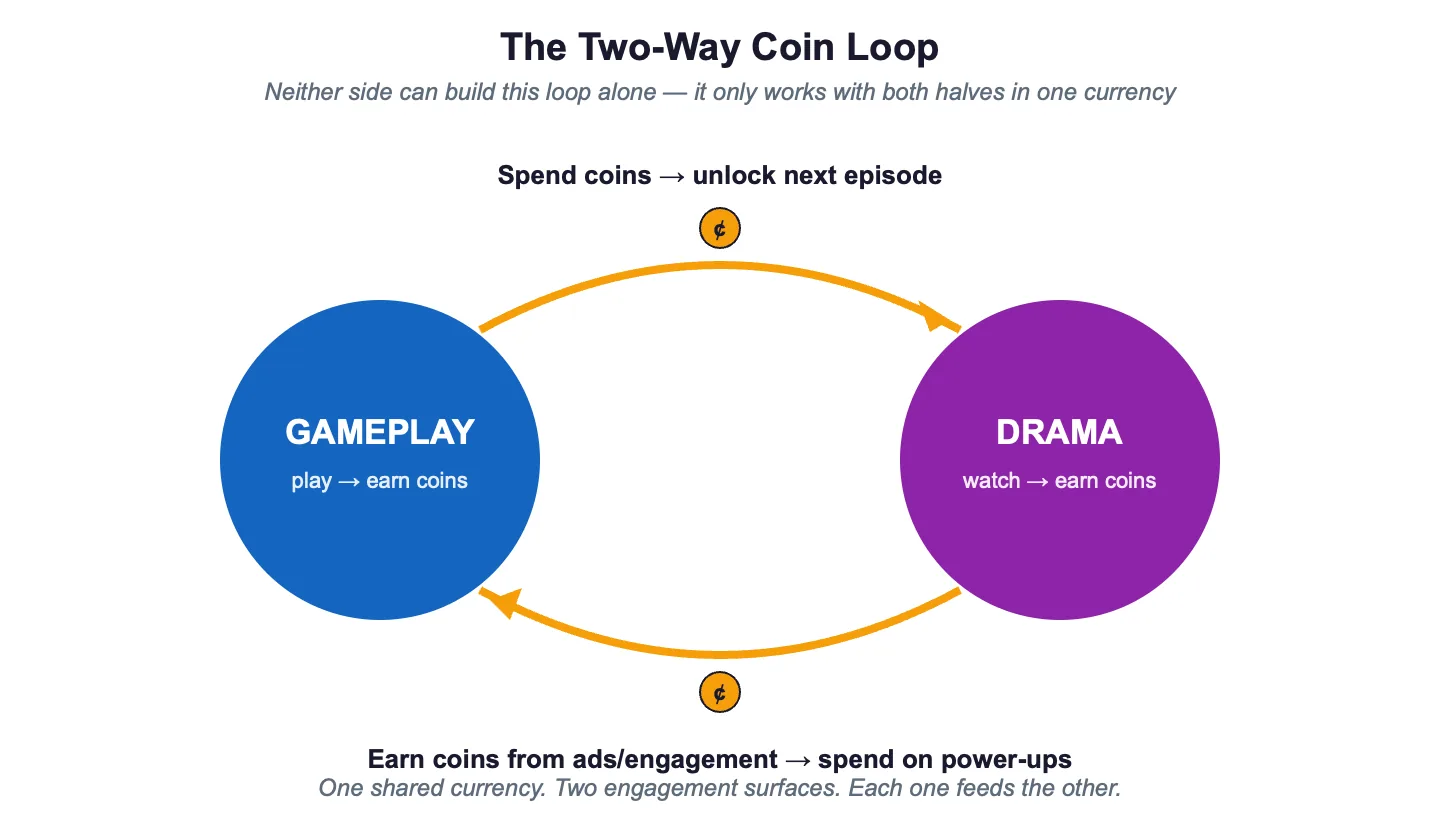
Here's the mechanic, stated plainly: a shared coin economy lets gameplay reward content access, and lets content engagement reward gameplay currency, in both directions at once. A player who earns coins through playing games can spend those coins unlocking the next episode of a drama series, the same way they might spend coins on a power-up. A viewer who watches a drama episode — particularly one with an embedded ad break, or a short interactive prompt built into the viewing experience — can earn coins back, the same coins usable inside the platform's games. Neither half of that loop is new on its own. What's new is connecting both halves into a single currency, because that's the part neither a pure gaming platform nor a pure short-video platform can build by itself. A gaming-only platform has no drama content to spend coins on. A drama-only platform has no gameplay loop generating coins to spend in the first place. The convergence only works once a single product contains both halves of the loop simultaneously.
This also solves a problem each category struggles with separately. Pure short-video and micro drama platforms have a passive-audience problem — watching is a low-effort action, which is great for reach but weak for the kind of habitual, repeat engagement gaming platforms are built around. Pure gaming platforms, meanwhile, have a content-variety problem — there are only so many genres of game most users want to play in a single session, and even a strong game catalog eventually plateaus a user's daily engagement ceiling. A combined coin economy addresses both gaps at once: drama content gives gaming platforms a second engagement surface that doesn't require active gameplay to consume, and gameplay gives drama platforms an active-participation layer that converts passive viewers into something closer to active currency-earners, with a direct incentive to keep returning rather than just binge-watching once and moving on.

None of this means every gaming platform should rush to bolt drama content onto an existing game catalog, and the execution risk here is real — a coin economy that feels forced, or content that feels like padding rather than something users actually want, will fail regardless of how clean the underlying mechanic is on paper. But the structural logic is sound, and it's the kind of convergence that tends to look obvious in retrospect once a platform actually pulls it off cleanly. The two categories were never as separate as the "gaming app" versus "video app" labels made them look. They were both running coin-gated attention loops the entire time. Someone was always going to notice they could run on the same currency.
🎮 Ready to play? Try these games on VPlay:
- Happy Glass 2 — Physics puzzle with simple satisfaction loops that keep players coming back
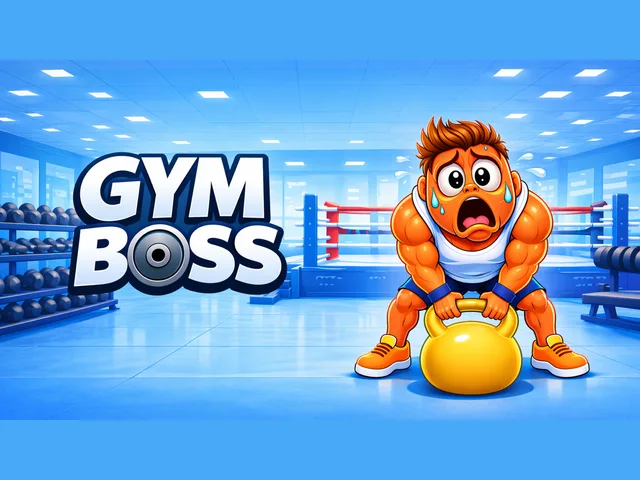
- Gym Boss — Progressive difficulty that creates dramatic tension with every rep
- Baby Sitter: Merge 2 — Merge mechanics with emotional storytelling hooks built into the gameplay
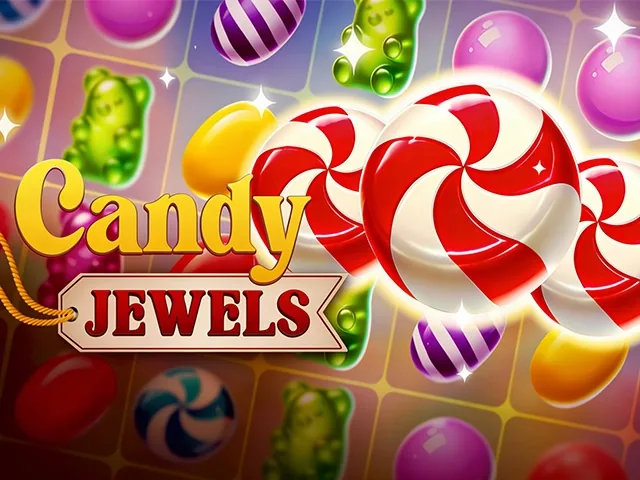
- Candy Jewels — Reward-driven match-3 that turns small wins into satisfying micro-dramas
Play these games

More from the blog
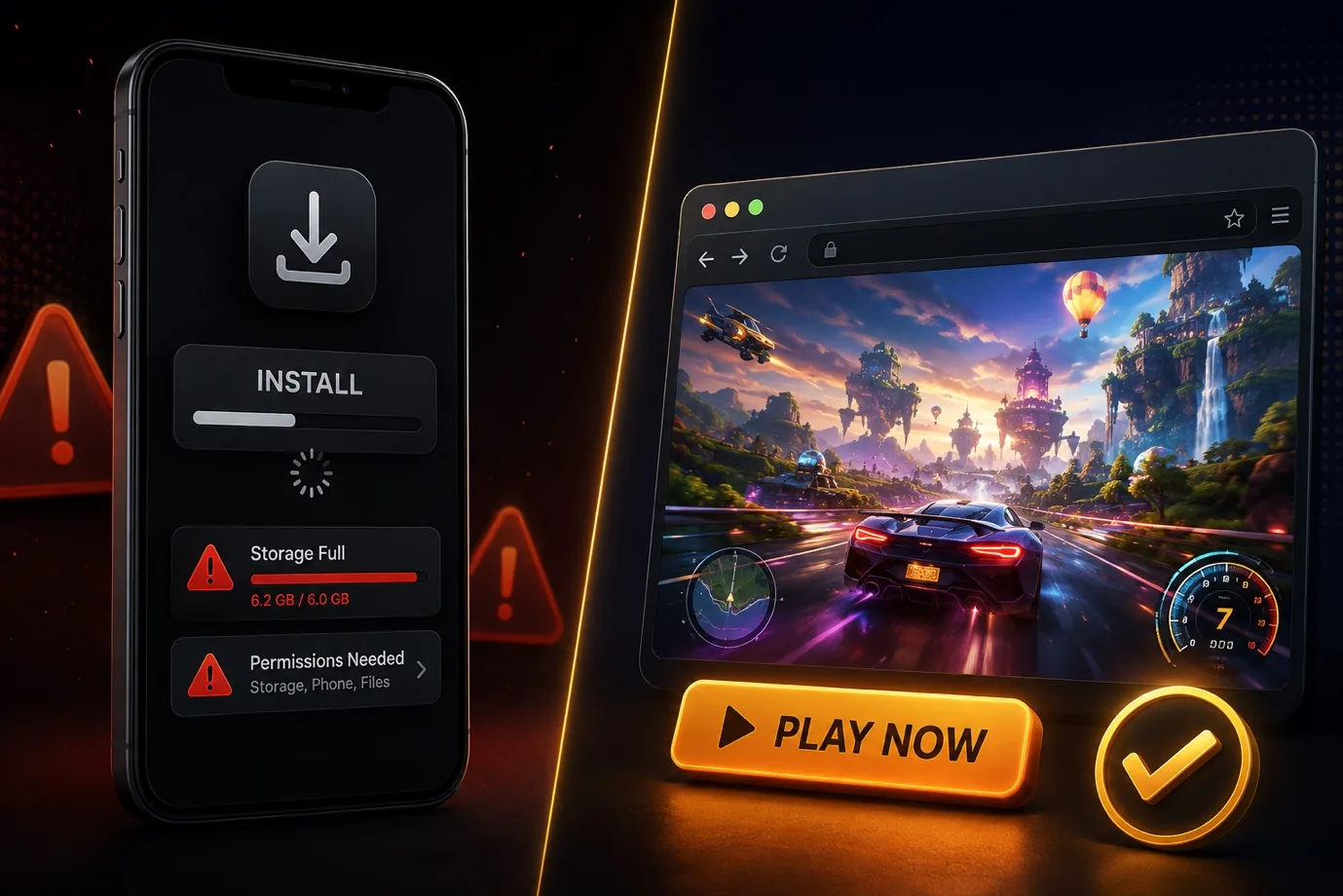
Why HTML5 Browser Games Are Making a Quiet Comeback in 2026
If you had told any gaming industry analyst five years ago that browser-based HTML5 games would be posting double-digit growth in 2026, they would have laughed you out of the room. The narrative was w

AI-Generated Game Art Is Everywhere Now. Here's What It's Actually Changing
Five takes on where AI-generated creative in gaming actually stands right now, not where the hype cycle wants it to stand.