
Eight Ball Pool Strategy Basics Most Players Skip
Play the game
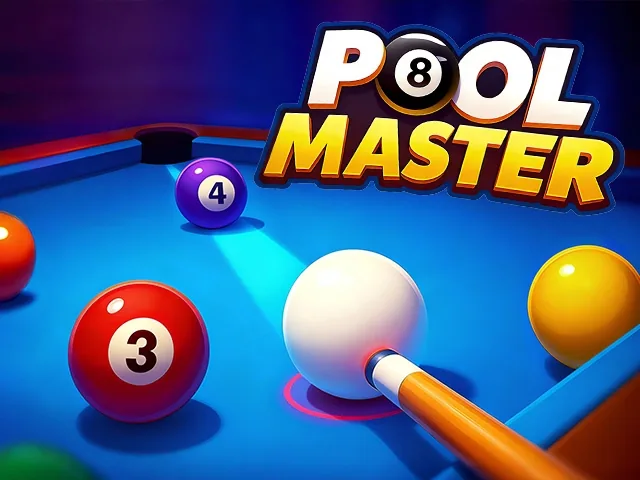
Pool Master
Most people learn pool the same way: someone shows them how to hold a cue, explains that you have to pot your group of balls before the eight, and then leaves them to figure out the rest by trial and error. That's how you end up with players who've logged hundreds of games and still make the same four mistakes every single match. None of these four things require exceptional hand-eye coordination. They require knowing what to actually pay attention to.
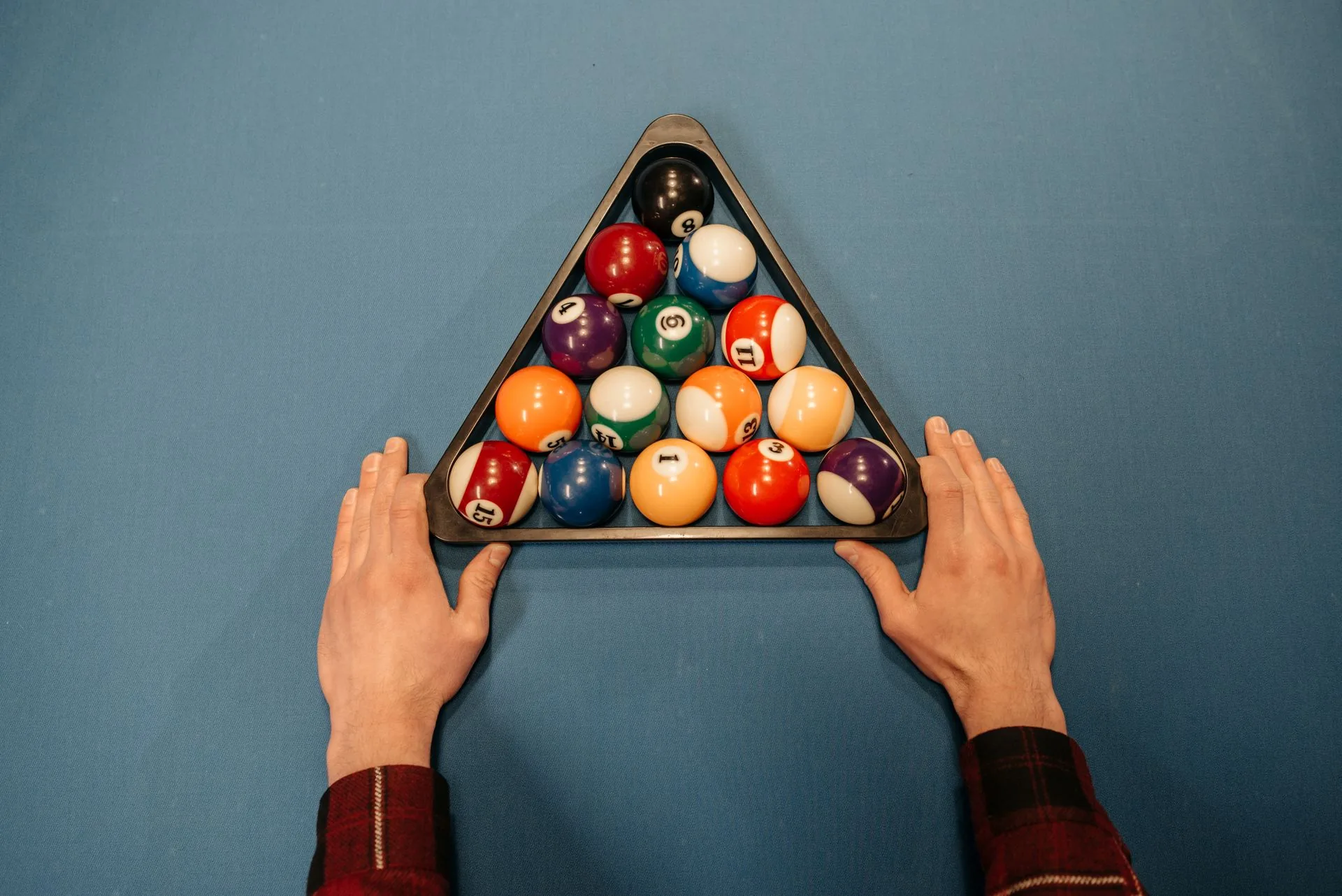
Start the break with intent, not just power. A lot of beginners treat the break shot as a formality — line the cue ball up somewhere in the kitchen, hit the rack as hard as possible, see what falls in. That approach occasionally produces a great break by accident, but it's not a strategy. A more deliberate break aims the cue ball at the head ball of the rack with enough precision to transfer force evenly through the stack, maximizing spread across the table rather than just scattering a few balls near the point of impact. Hitting slightly off-center on the head ball, rather than dead center, tends to open the rack more evenly and reduces the chance of clustering several balls together where they'll be hard to separate later. The goal isn't just "make something go in." It's "leave the table in a state where you have options on your next shot," which matters more than people realize when they're standing at the table for the first shot of the game.
Stop potting the nearest ball just because it's nearest. This is probably the single most common habit separating new players from intermediate ones. The nearest ball to pocket is rarely the right ball to shoot first if it leaves the cue ball in a bad spot for your next shot. Real pattern play means looking at your entire group of balls before you take a single shot, and mentally sequencing which ball to pot in which order so that potting one ball naturally sets up position for the next. A ball that's slightly harder to pot but leaves perfect position for your following shot is almost always the better choice than an easy pot that leaves you with no good follow-up. Beginners think shot by shot. Better players think in sequences of three or four shots before committing to the first one.
Learn to play safe when there's no good shot. This is the strategy most beginners never use at all, because it feels like giving up a turn rather than actually playing pool. It isn't. When none of your balls have a clean path to a pocket, attempting a low-percentage shot anyway — just to "do something" — usually accomplishes nothing except leaving the cue ball in an easy position for your opponent. A safety shot instead deliberately avoids potting, and focuses on leaving the cue ball somewhere difficult for the opponent to work with: tucked behind one of their own balls, snookered against a rail, or positioned so their only realistic shots are extremely thin and low-percentage. Giving up your turn on purpose, in a way that costs your opponent tempo, is a real offensive move disguised as a defensive one.
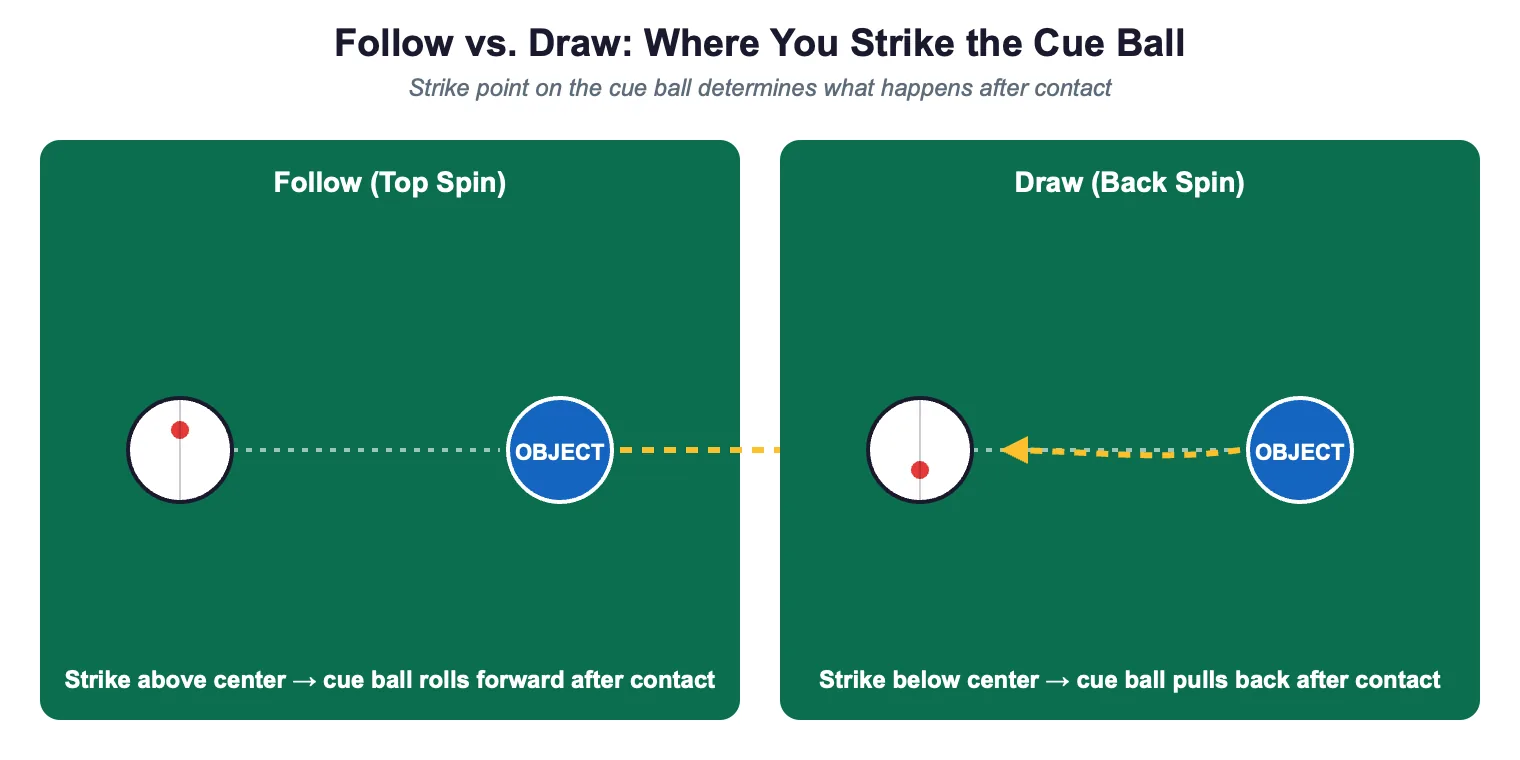
Use follow and draw instead of just hoping the cue ball stops somewhere useful. Hitting the cue ball above its center causes it to continue rolling forward after contact with the object ball — useful when you want the cue ball to travel further down the table after a pot. Hitting below center causes the cue ball to draw backward after contact, which is the shot most beginners never practice but need constantly, because it's often the only way to pull the cue ball back into position after potting a ball that's tucked close to a rail or near another ball. Most new players hit dead center on every shot and treat wherever the cue ball happens to stop as good enough. Learning just these two basic strikes — follow and draw — gives you actual control over where the cue ball ends up, instead of leaving it to chance every single shot.

None of these four habits require better aim. They require treating each shot as one move in a sequence rather than an isolated event, which is the actual skill separating players who win consistently from players who occasionally get lucky.
🎮 Ready to play? Try these games on VPlay:
- Pool Master — Master the geometry of angles, spin, and position play in classic 8-ball
- Archer Go — Archery accuracy game where understanding trajectory matters more than raw speed
- Bowling Stars — Precision bowling that rewards consistent technique over random chance
- Tower Defenders — Strategic placement game where positioning fundamentals determine long-term success
Play these games



More from the blog
Puzzle Game Design: Why the Best Levels Feel Impossible Until They Aren't
There's a specific moment in every great puzzle game that designers chase and players live for. You've been staring at the same screen for five minutes. You've tried every obvious move. You're convinc

How Ludo Odds Actually Work: A Closer Look at the Dice
Most "how to win at Ludo" content online amounts to vague advice like "be patient" or "don't take risks," none of which actually explains anything, because the real answer to almost every decision in

Why Carrom Never Made It Big Outside South Asia (And What That Says About Cultural Games)
Here's a question that doesn't have a clean answer, and it's worth admitting that upfront rather than pretending otherwise: nobody really knows exactly where carrom came from. The most commonly repeat