
How Ludo Odds Actually Work: A Closer Look at the Dice


Play the game
Pool Master
Most "how to win at Ludo" content online amounts to vague advice like "be patient" or "don't take risks," none of which actually explains anything, because the real answer to almost every decision in Ludo is a probability calculation that takes about ten seconds to work out once you know the formula. Here's the actual math, with real numbers instead of vibes.
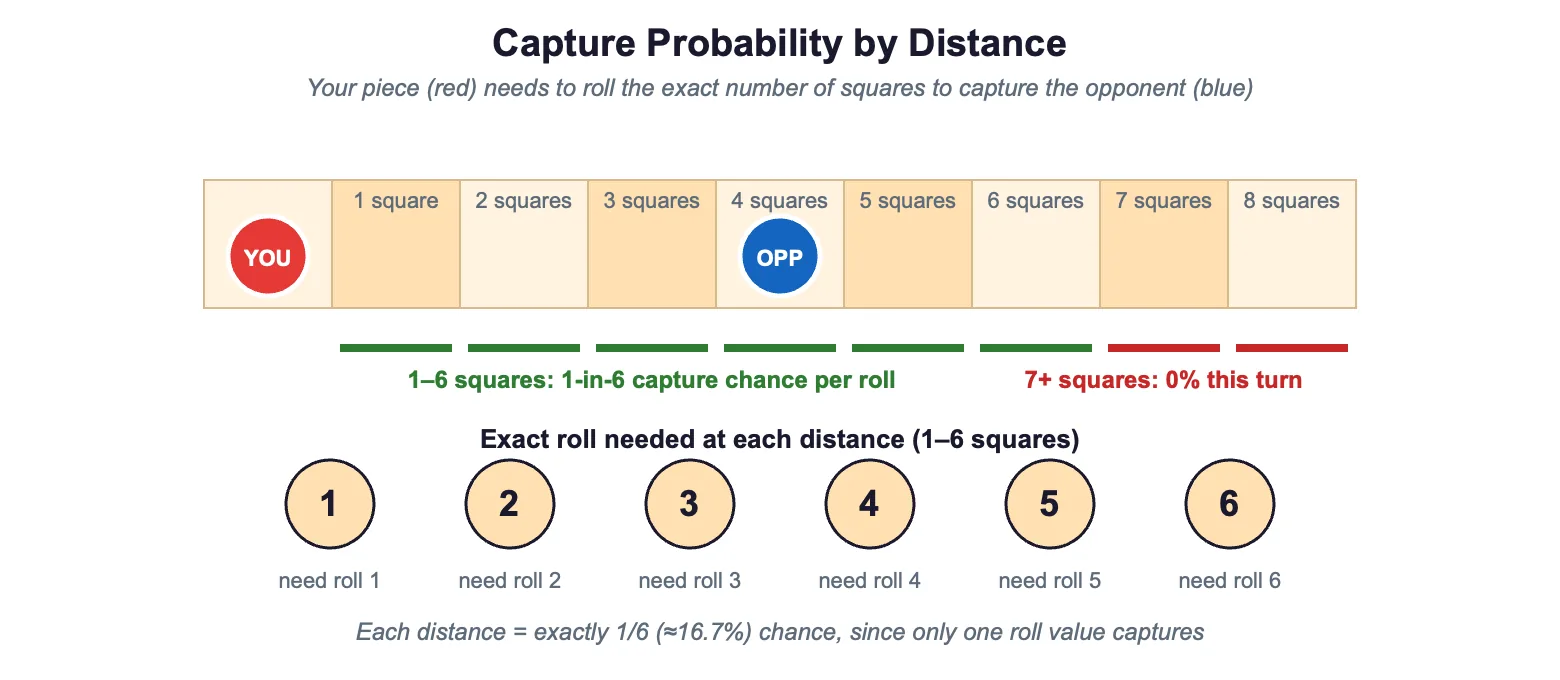
Getting a piece out of the yard. Every Ludo piece starts locked in the home yard, and the only way out is rolling a six. A single six-sided die gives you exactly a 1-in-6 chance of rolling a six on any given roll — about 16.7%. That sounds low in the moment, but it's worth knowing the actual expected wait: for a fair die, the expected number of rolls before you see your first six is 1 divided by the probability, which works out to exactly 6 rolls on average. Most players intuitively feel like they're "due" for a six after rolling three or four times without one, but the math doesn't actually support that feeling — each roll is independent, and the die has no memory of what it rolled last time. The wait can run longer than 6 rolls plenty of the time; that's just how averages work when the underlying event is genuinely random each time.

Capturing an opponent's piece. This is where the math actually changes player behavior once you understand it properly. If an opponent's piece sits exactly N squares ahead of yours, where N is somewhere between 1 and 6, you have exactly a 1-in-6 chance of capturing it on your very next roll — you simply need to roll that specific number. If the piece is more than 6 squares away, you cannot capture it in a single roll no matter what you roll; you'll need multiple turns to close the distance, during which the opponent has just as much opportunity to either move that piece further away or use their own roll to capture one of your pieces first. The practical implication: a piece sitting 1 to 6 squares behind an opponent's piece represents a live, immediate threat worth exactly a 16.7% chance per roll, while a piece 10 squares behind represents essentially no immediate threat at all — it's a future consideration, not a current one.
Why exposed pieces matter more than pieces closest to home. This is the single biggest gap between casual players and players who actually win consistently. The instinct most beginners follow is to advance whichever piece is furthest along, since it feels like that piece is "closest to scoring" and therefore the most valuable to protect. The math says otherwise. A piece that's currently within 6 squares of an opponent's piece is facing a roughly 1-in-6 chance of getting sent all the way back to the yard on the opponent's very next turn — and a captured piece doesn't just lose a little progress, it loses everything, restarting its entire journey from zero. Compare that to the piece furthest along, sitting safely out of immediate capture range: advancing it a few more squares adds a small amount of progress, with no corresponding risk being addressed. The expected value math is straightforward once you frame it this way — protecting a piece facing a 16.7% chance of losing all its progress is almost always worth more than advancing a piece that's facing no immediate risk at all, even though the "safe" piece looks more exciting to move because it's closer to home.
None of this requires advanced math. It requires actually counting squares before you move, rather than moving on instinct toward whichever piece looks like it's winning. The players who consistently come out ahead aren't luckier with the dice. They're just running the same 1-in-6 calculation every single turn, and choosing to defend the piece the math says is actually in danger.
🎮 Ready to play? Try these games on VPlay:
- Pool Master — 8-ball pool where understanding angles and probability separates winners from losers
- Candy Jewels — Match-3 strategy that rewards pattern recognition and forward planning
- Element Blocks — Block placement puzzle where spatial reasoning and probability shape your score
- Tower Defenders — Tower placement strategy where understanding odds determines victory or defeat
Play these games


More from the blog
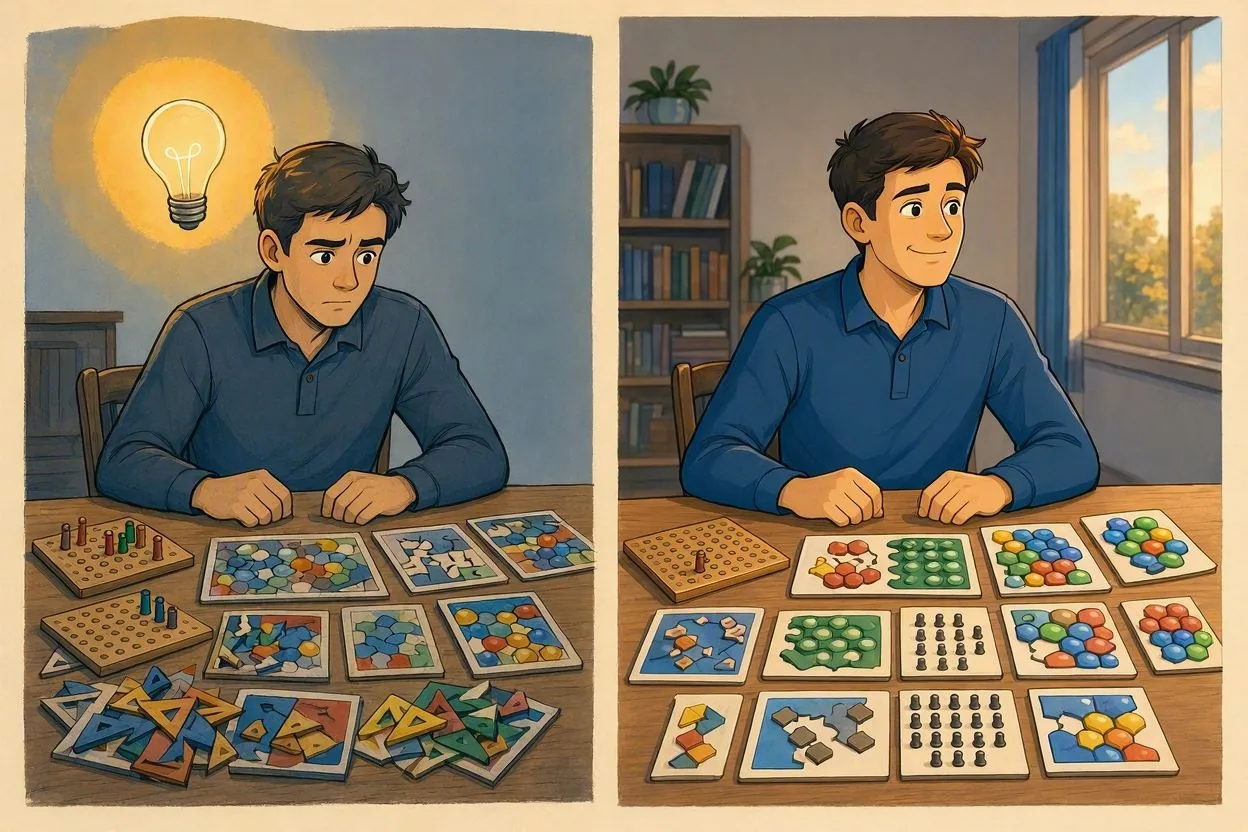
Puzzle Game Design: Why the Best Levels Feel Impossible Until They Aren't
There's a specific moment in every great puzzle game that designers chase and players live for. You've been staring at the same screen for five minutes. You've tried every obvious move. You're convinc

Eight Ball Pool Strategy Basics Most Players Skip
Most people learn pool the same way: someone shows them how to hold a cue, explains that you have to pot your group of balls before the eight, and then leaves them to figure out the rest by trial and

Why Carrom Never Made It Big Outside South Asia (And What That Says About Cultural Games)
Here's a question that doesn't have a clean answer, and it's worth admitting that upfront rather than pretending otherwise: nobody really knows exactly where carrom came from. The most commonly repeat