
A Beginner's Guide to Online Chess Strategy: Five Openings Worth Learning

Most chess advice for beginners starts in the wrong place. It tells you to "control the center" or "develop your pieces" without ever showing you what that actually looks like on a board, move by move, against a real opponent who isn't going to cooperate with your plan. Openings solve that problem because they're concrete. You don't need to understand chess theory to play one — you just need to know the first three or four moves and the reason behind them, and the reasoning will start making sense the more you play it.
Here are five openings worth actually learning, what each one is doing mechanically, and the mistake most beginners make with it.
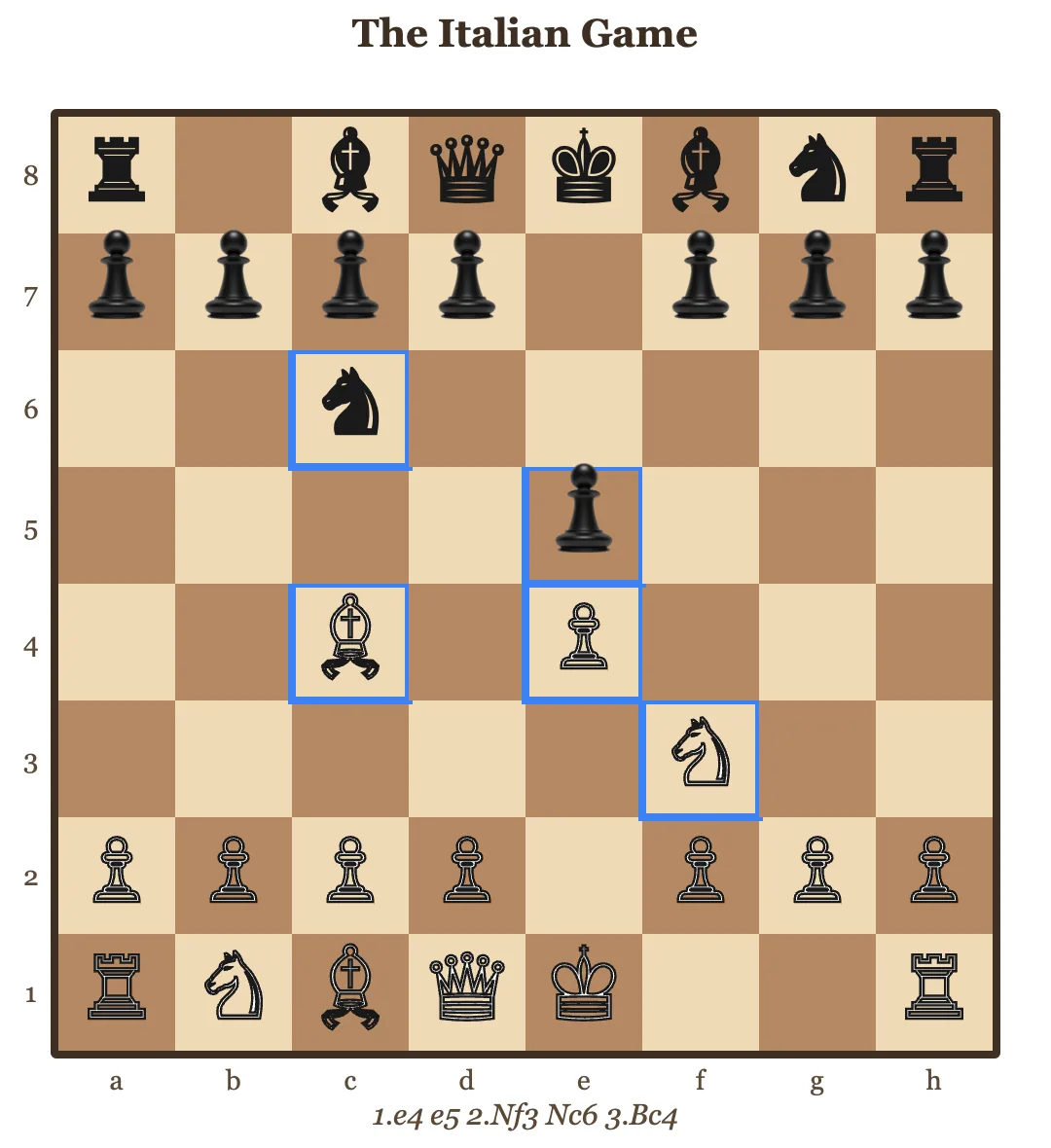
The Italian Game opens 1.e4 e5 2.Nf3 Nc6 3.Bc4. The bishop move to c4 isn't decorative — it's aiming directly at f7, the weakest square in Black's starting position, the one square not defended by another pawn at the start of the game. This opening rewards fast, simple development: knight out, bishop out, castle, and you're already pressuring a real weakness without having calculated anything complicated. The common beginner mistake is getting greedy too early — seeing the f7 pressure and immediately trying to force a quick attack with something like an early queen sortie, before the rest of your pieces are out. A queen that moves twice in the opening while your other pieces sit on their starting squares is usually a queen that's about to get chased around the board for no real gain.
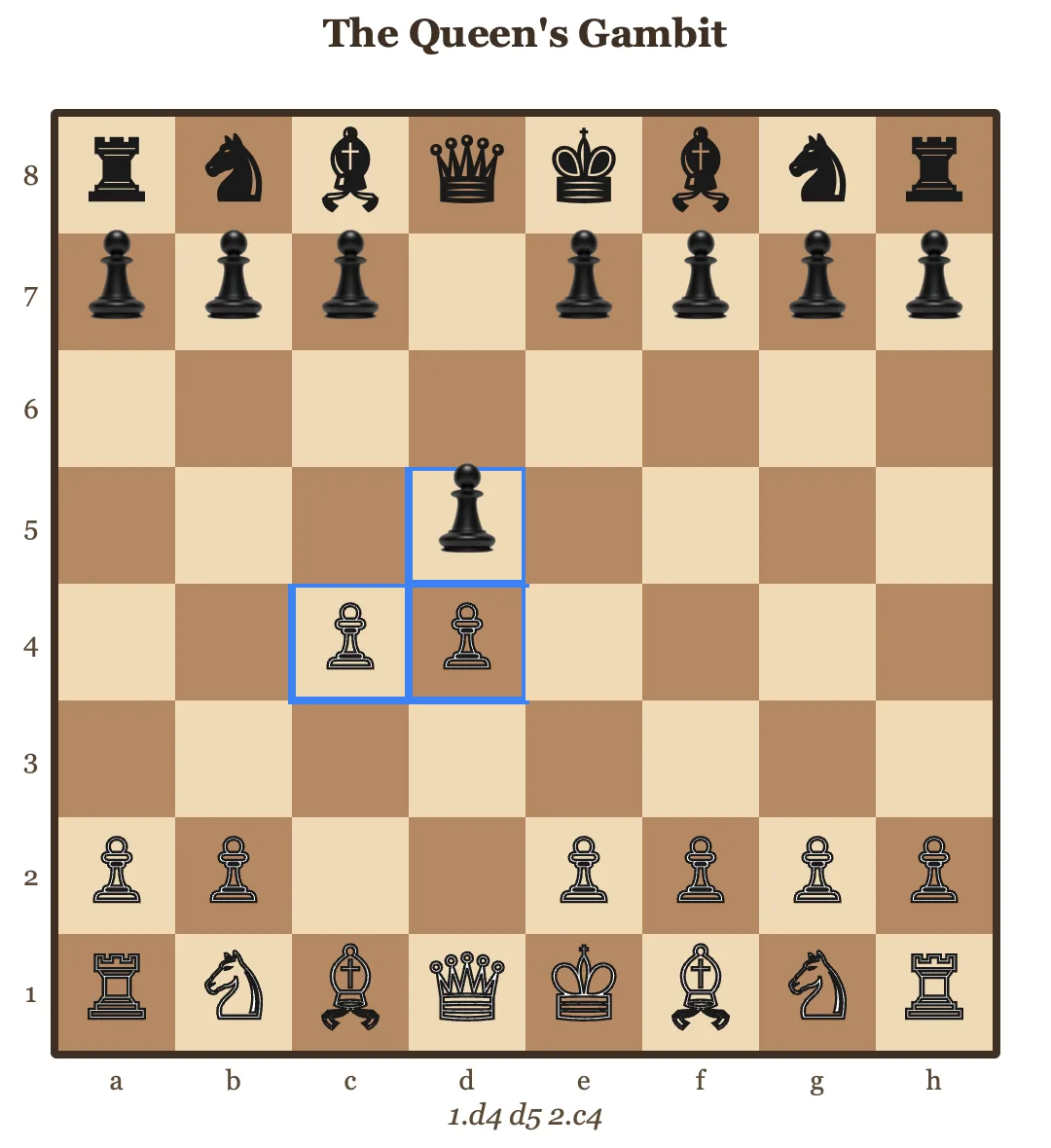
The Queen's Gambit opens 1.d4 d5 2.c4. The name is slightly misleading — you're not sacrificing the c4 pawn permanently, you're offering it temporarily in exchange for faster central control and easier piece development. If Black takes the pawn with 2...dxc4, White typically gets it back within a few moves while having built a stronger position in the meantime. The mistake beginners make isn't really on White's side — it's what happens when beginners play Black and panic about "losing a pawn," overextending to hold onto it with moves like an early ...b5, which weakens the queenside far more than the temporary pawn was ever worth. The pawn was never the point. The development tempo was.
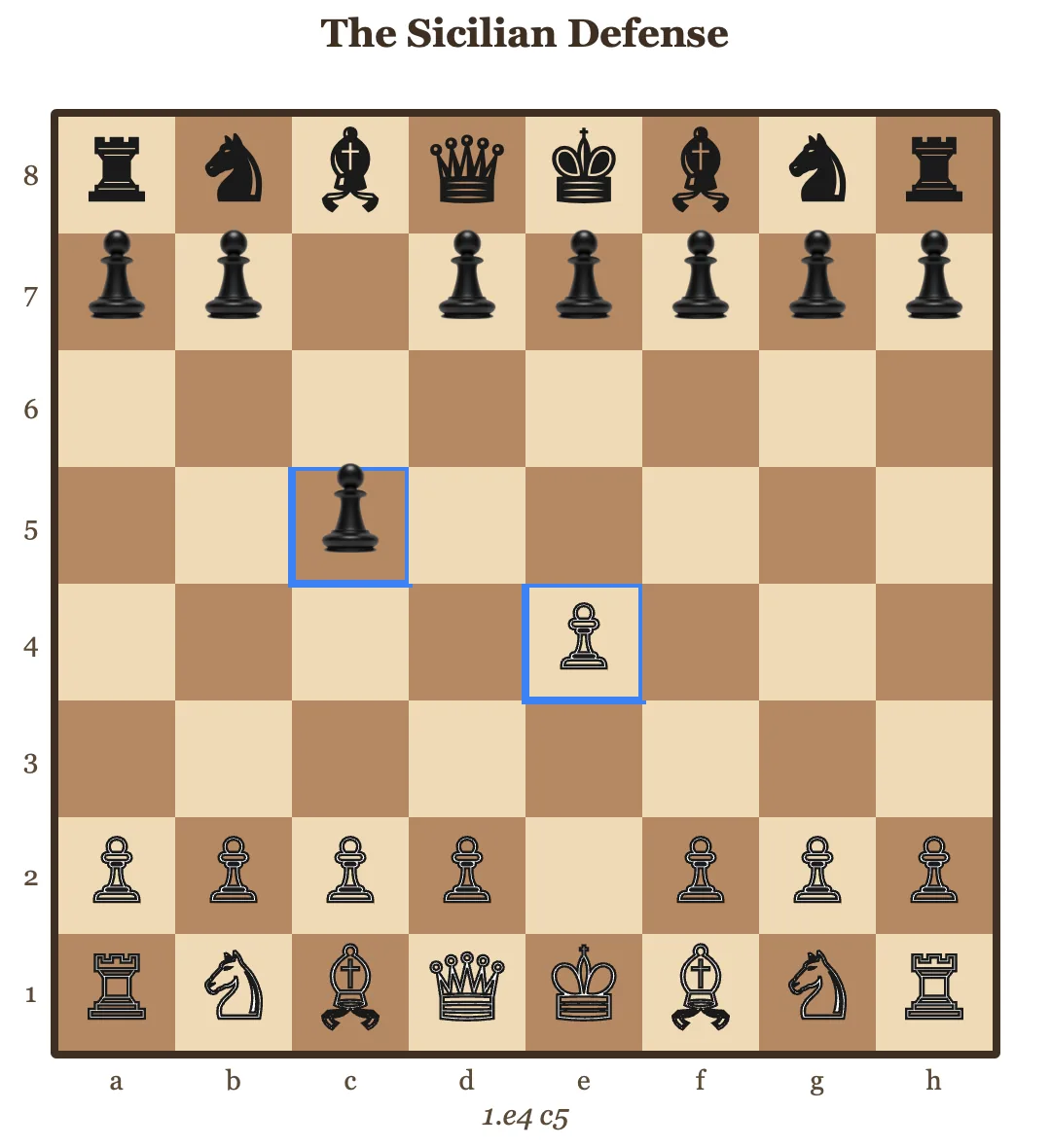
The Sicilian Defense opens 1.e4 c5. This is Black's most popular response to 1.e4 at every serious level of chess, and the reason is structural rather than tactical: instead of mirroring White's central pawn with 1...e5, Black challenges the center from the side, which leads to asymmetrical positions where both sides have real chances to attack rather than settling into a quiet, balanced game. The beginner mistake here is treating the Sicilian like a passive defense — sitting back, developing slowly, and waiting to see what White does. The Sicilian rewards the opposite instinct. Black is supposed to generate queenside counterplay, often with moves like ...a6 and ...b5, pushing back rather than waiting.
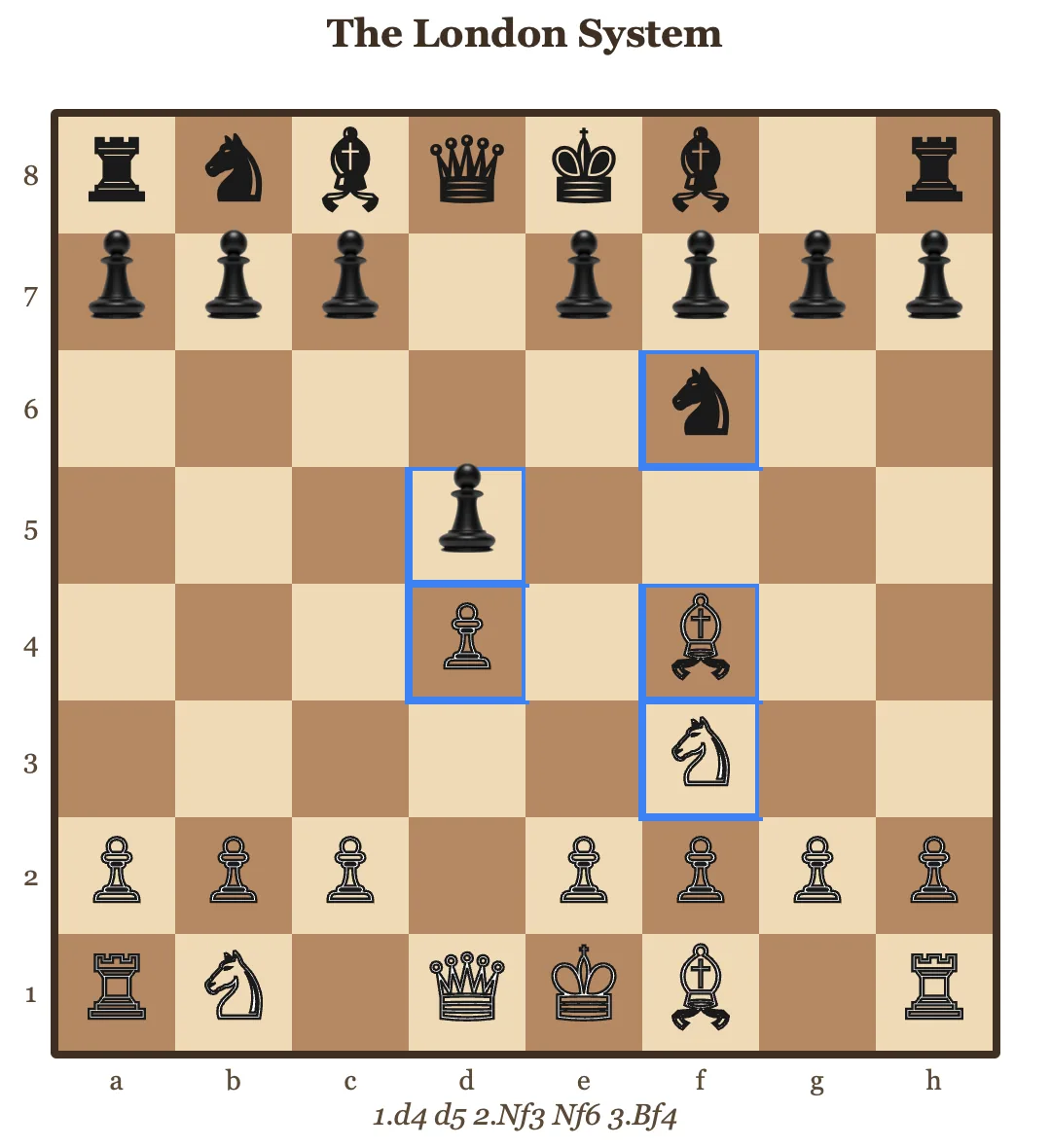
The London System opens 1.d4 d5 2.Nf3 Nf6 3.Bf4. This has become one of the most popular openings in online chess specifically, for a reason that has nothing to do with being the "best" opening theoretically and everything to do with being low-maintenance. The bishop develops outside the pawn chain before the pawns lock it in, the structure is solid and hard to attack sharply, and White can play roughly the same setup against almost anything Black does, which means less memorization and fewer ways to get caught in unfamiliar territory. The mistake beginners make with the London is playing it too passively after the opening ends — treating the solid structure as the whole plan, rather than following up with moves like c3 and Nbd2 that actually build toward something. A solid opening that goes nowhere afterward is just a slow way to get outplayed in the middlegame.
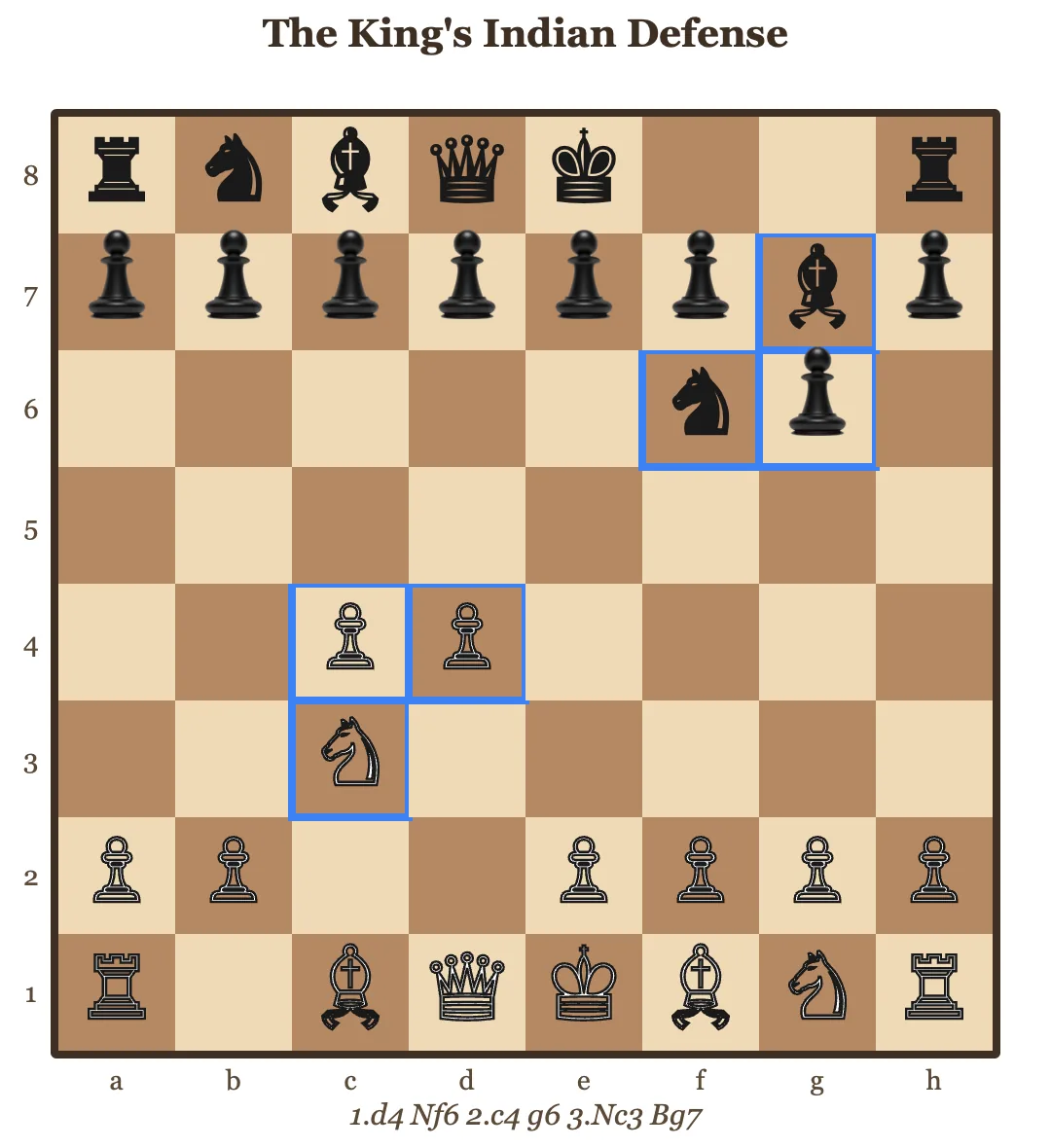
The King's Indian Defense opens 1.d4 Nf6 2.c4 g6 3.Nc3 Bg7. This is a different philosophy entirely from the other four — Black deliberately lets White build a large pawn presence in the center early on, fianchettoes the bishop to g7, and plans to strike back later with a central pawn break, usually ...e5 or ...c5, once development is complete. It's a hypermodern idea: control the center indirectly, through pieces, rather than occupying it immediately with pawns. The beginner mistake is striking back too early, pushing ...e5 before castling and before the rest of the pieces are coordinated, which hands White a stronger position in the center without Black having built the piece activity needed to actually contest it.

None of these five openings will make you a strong player on their own. What they will do is give you a concrete plan for the first four or five moves of a game, instead of standing at the board on move one wondering what you're supposed to be doing. That's worth more early on than any amount of abstract advice about controlling squares you can't yet see the importance of.
So, what’s your move.
More from the blog

Puzzle Game Design: Why the Best Levels Feel Impossible Until They Aren't
There's a specific moment in every great puzzle game that designers chase and players live for. You've been staring at the same screen for five minutes. You've tried every obvious move. You're convinc

How Ludo Odds Actually Work: A Closer Look at the Dice
Most "how to win at Ludo" content online amounts to vague advice like "be patient" or "don't take risks," none of which actually explains anything, because the real answer to almost every decision in

Eight Ball Pool Strategy Basics Most Players Skip
Most people learn pool the same way: someone shows them how to hold a cue, explains that you have to pot your group of balls before the eight, and then leaves them to figure out the rest by trial and