
Puzzle Game Design: Why the Best Levels Feel Impossible Until They Aren't
Play the game
Blockup Puzzle
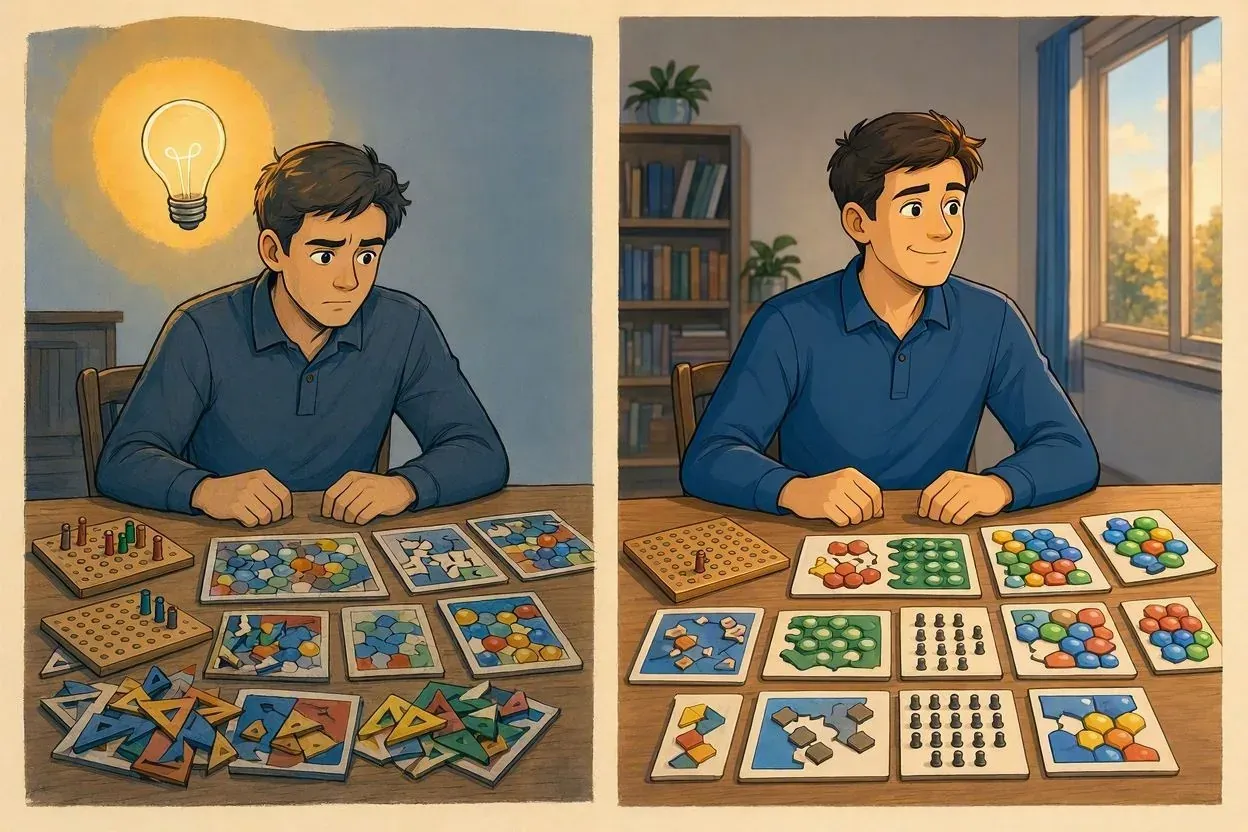
There's a specific moment in every great puzzle game that designers chase and players live for. You've been staring at the same screen for five minutes. You've tried every obvious move. You're convinced the level is broken, that there's no solution, that the developers must have made a mistake.
And then — click.
Everything falls into place. The solution was right there the whole time, hiding in plain sight. You feel simultaneously brilliant and slightly foolish for not seeing it earlier. That's the magic of great puzzle design: the feeling of impossibility that dissolves into perfect, elegant simplicity.
As someone who's analyzed hundreds of puzzle games for VPlay — from the classic brainvita game online that's been challenging players for decades to modern takes on the triangle game online format — I can tell you that this magic isn't accidental. It's designed. And the principles behind it haven't changed much since the earliest peg solitaire boards.
The Art of Controlled Frustration
Great puzzle design walks an impossibly thin line. Too easy, and players get bored and leave. Too hard, and players get frustrated and leave. The sweet spot is what psychologists call "flow state" — that zone where the challenge perfectly matches your skill level, and time seems to disappear.
But here's the secret: the best puzzles start by making you feel slightly outmatched. They want you to look at the board and think, "There's no way." That initial intimidation is what makes the eventual solution feel like a victory.
Think about the last time you played a bubble shooter game online. The best levels stack the bubbles in patterns that look completely overwhelming at first glance. You see the wall of colors descending and your brain says, "This is impossible." But as you start shooting, you begin to see the chains, the angles, the combinations that clear half the board in one shot. The level wasn't impossible — it was just hiding its structure until you engaged with it.
That's controlled frustration. It's not random difficulty. It's carefully calibrated to make you work for the solution without ever making the solution genuinely unattainable.
Information Hiding: The Designer's Most Powerful Tool
The difference between a puzzle that feels clever and one that feels unfair comes down to information hiding.
A fair puzzle gives you all the information you need to solve it — but it doesn't organize that information for you. The solution is visible, but it's not obvious. You have to rearrange the pieces in your head, see the patterns the designer hid in plain sight, and make the connections yourself.
An unfair puzzle withholds critical information. It requires you to guess, or to try random combinations until something works. The solution only becomes clear after you've stumbled on it by accident.
This is why games like 4 pics 1 word game online work so well. All four pictures are right there in front of you. All the letters you need are available. The solution is completely visible — but your brain has to make the connection between four seemingly unrelated images and extract the common thread. Nothing is hidden. Everything is available. And yet the solution can feel elusive until that moment of insight.
Compare that to a bad puzzle where a key mechanic is never explained, or a required item is hidden behind an invisible pixel. The difference is night and day.
The Principle of Maximum Elegance
There's a principle in mathematics and science called Occam's Razor: the simplest explanation is usually the correct one. Great puzzle design follows a similar rule.
The best puzzle solutions are the ones that make you say, "Of course! How did I not see that?" They use a small number of moves, exploit a single clever observation, or reveal a pattern that was staring you in the face. They feel elegant.
I've seen this in everything from the triangle game online where you're removing pegs according to simple rules to complex spatial puzzles that require rotating pieces in three dimensions. The memorable levels are never the ones that require 47 complicated moves. They're the ones that require three moves — but three moves that nobody sees until they've spent ten minutes looking.
This is why playtesting is so critical. A puzzle designer knows the solution, so to them it always looks obvious. They need fresh eyes to tell them whether their "impossible" level is actually impossible, or whether their "clever" solution is actually just confusing.
How Different Genres Achieve the Same Magic
Puzzle design principles manifest differently across genres, but the core goals remain the same. Let's look at how different types of puzzle games create that "impossible until it isn't" feeling:
Classic Board Puzzles
Games like brainvita game online (also known as peg solitaire) achieve their magic through extreme simplicity of rules combined with enormous complexity of possibility. The rules take 30 seconds to learn. Mastering the game takes hundreds of hours. The final peg sitting in the center of the board feels impossible until you've internalized the movement patterns and can see 15 moves ahead.
Visual Puzzles
Games like 4 pics 1 word game online work through cognitive association. The puzzle isn't mechanical — it's linguistic and visual. Your brain has to filter out the distracting details in each image and find the single concept that connects them. The "click" moment happens when your brain makes that semantic leap.
Action-Puzzle Hybrids
Games like bubble shooter game online add a time pressure element. The puzzle isn’t just about finding the right shot — it’s about finding it before the wall descends. That time pressure amplifies the feeling of impossibility. When you’re down to your last few shots and the board looks hopeless, finding that one perfect chain reaction that clears everything is exponentially more satisfying.
Physics-Based Puzzles
Modern puzzle games often incorporate physics, adding a layer of unpredictability that makes solutions feel less like math problems and more like discoveries. The "impossible" feeling comes from not being able to fully predict how objects will bounce, roll, and interact — and the satisfaction comes from when your intuition about those physics turns out to be exactly right.
What This Means for Players and Developers
For players, understanding these principles can actually make you better at puzzle games. When you're stuck on a level that feels impossible, remind yourself:
- All the information you need is probably already visible
- The solution is likely simpler than you think
- Look for patterns rather than trying random moves
- If you're overcomplicating it, you're probably on the wrong track
For developers and designers, the lesson is clear: your job isn't to stump players. It's to create the conditions for insight. You want players to struggle just enough to value the solution, but not so much that they walk away. You want to hide information in plain sight, not lock it away. You want solutions that feel elegant, not convoluted.
The Timeless Appeal of the Puzzle
In an era where games are increasingly complex, with open worlds, branching narratives, and live service models, there's something deeply comforting about a great puzzle level. It doesn't demand 40 hours of your time. It doesn't require you to learn a control scheme with 20 buttons. It presents you with a single, self-contained problem, and it rewards you with a moment of genuine insight.
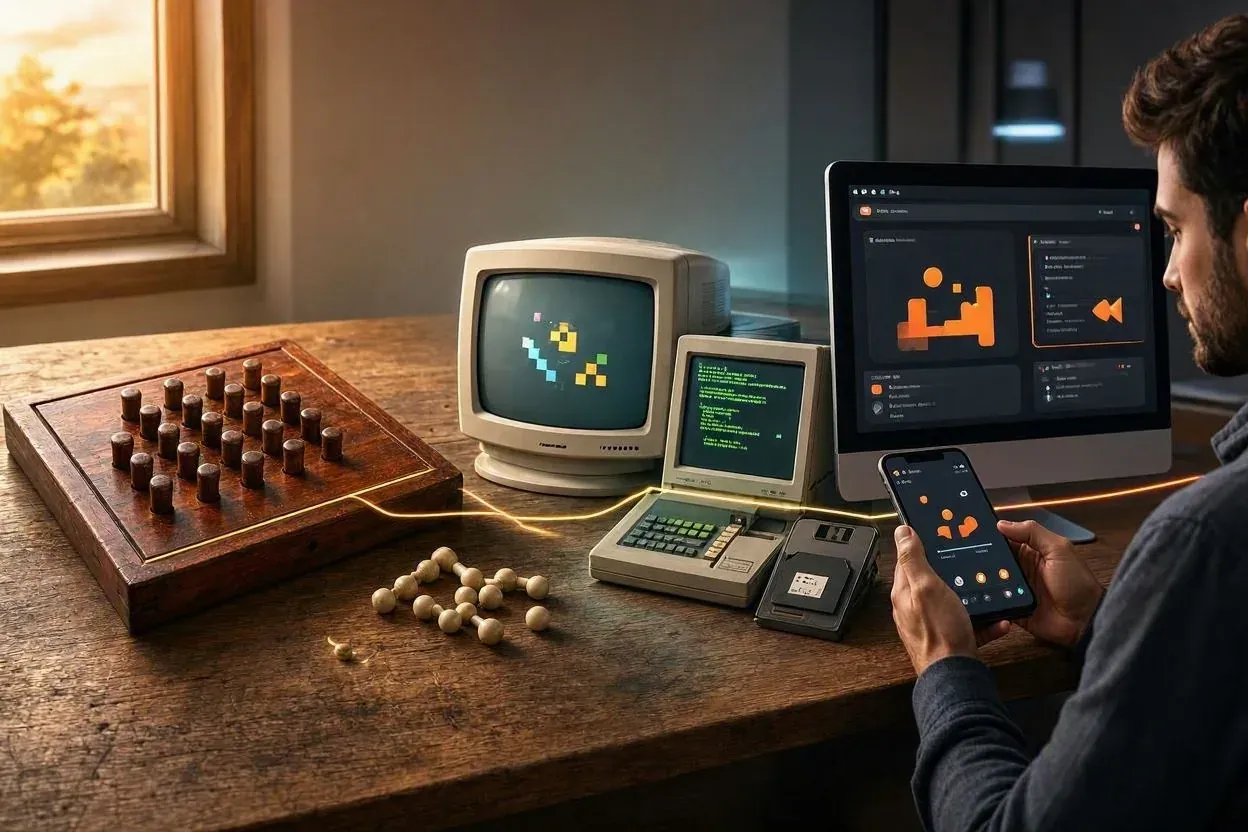
That's why the brainvita game online is still played millions of times every year, decades after it was first created. That's why new takes on the triangle game online keep finding audiences. That's why the simple pleasure of matching bubbles in a bubble shooter game online or connecting concepts in 4 pics 1 word game online never really goes out of style.
Great puzzle design is timeless because it taps into something fundamental about human cognition: the pleasure of seeing what was hidden, of solving what seemed unsolvable, of that quiet "aha" moment that makes you feel just a little bit smarter than you were five minutes ago.
The next time you're stuck on a puzzle level that feels impossible, take a breath. Step back. The solution is probably right there in front of you, waiting for your brain to make the connection. And when it does — that's the magic.
Ready to test your puzzle-solving skills? Explore our full puzzle game collection featuring everything from classic brainvita to modern bubble shooters. No downloads, no installs — just click and challenge yourself.
Hide Li is VPlay's resident game designer and art critic. She analyzes game mechanics, visual design, and player psychology to help readers understand what makes games work (and what makes them fail). When she's not writing about design, she's probably designing something herself.
Play these games
More from the blog

How Ludo Odds Actually Work: A Closer Look at the Dice
Most "how to win at Ludo" content online amounts to vague advice like "be patient" or "don't take risks," none of which actually explains anything, because the real answer to almost every decision in
Eight Ball Pool Strategy Basics Most Players Skip
Most people learn pool the same way: someone shows them how to hold a cue, explains that you have to pot your group of balls before the eight, and then leaves them to figure out the rest by trial and

Why Carrom Never Made It Big Outside South Asia (And What That Says About Cultural Games)
Here's a question that doesn't have a clean answer, and it's worth admitting that upfront rather than pretending otherwise: nobody really knows exactly where carrom came from. The most commonly repeat