
The Developer's Guide to Getting Your Game Featured on a Portal
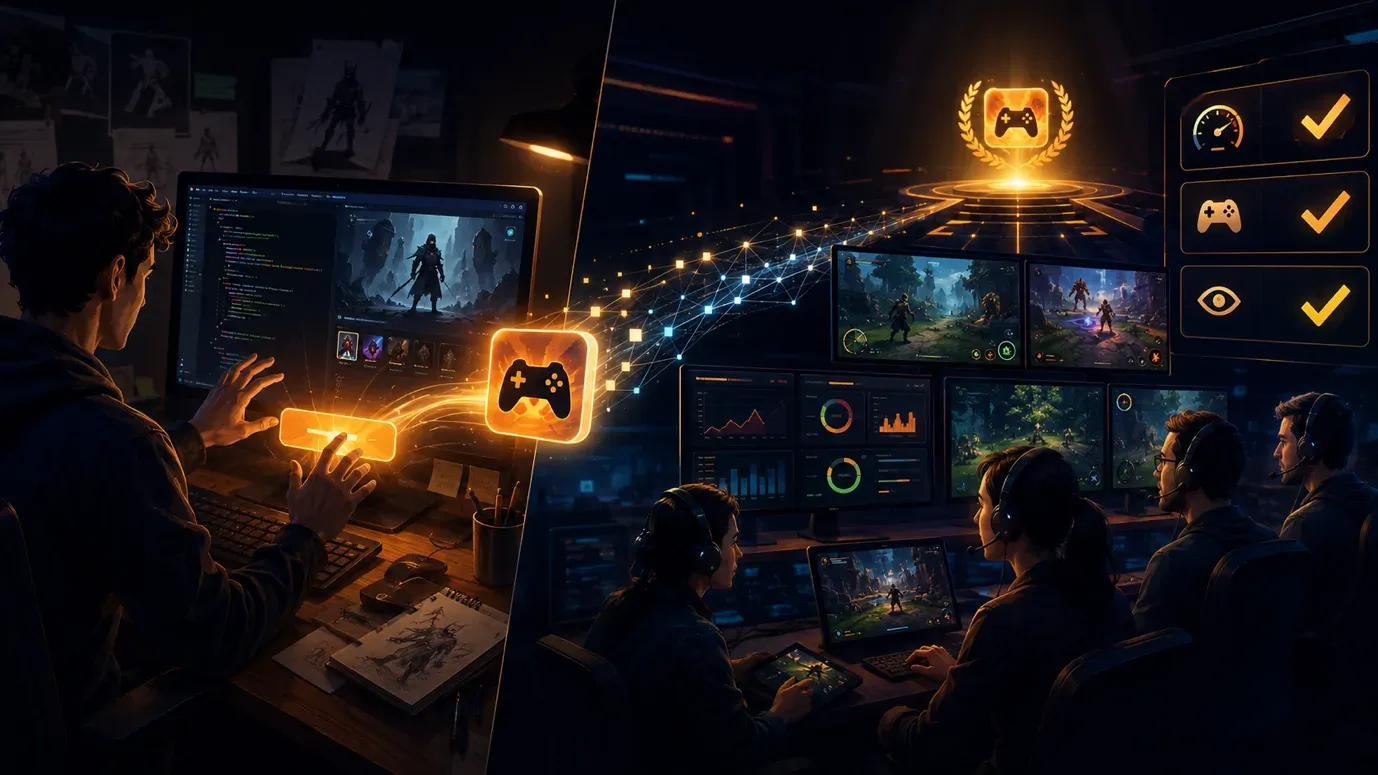
Every week, our team at VPlay reviews dozens of game submissions from developers around the world. Some are polished, some are rough, some are genuinely surprising. And every single developer who submits is asking the same unspoken question: What do I need to do to get featured?
Most "how to get featured" articles online are written from the outside looking in — guesswork based on what seems to work, or generic advice like "make a good game." Today, I want to pull back the curtain and tell you exactly what happens on our side of the submission form, and what actually makes us sit up and say, "This one deserves the spotlight."
This isn't about gaming the system. There are no secret keywords or hacky tricks. It's about understanding what a platform like VPlay actually needs, and how your game can deliver it.
First, Understand What We're Actually Looking For
Before I get into specifics, you need to understand our incentives as a platform. This is the part almost no developer stops to think about.
We don't feature games just because they're "good." We feature games because they make our platform better for our players. Our goals are simple:
- Keep players coming back
- Give them a quality experience they can trust
- Introduce them to games they wouldn't have found on their own
If your game helps us do those things, we want to feature it. If it doesn't, even the most technically impressive submission will sit in our catalog without a spotlight.
That's the fundamental shift in perspective you need: it's not about your game. It's about what your game does for our players.
The First 10 Seconds
Let me walk you through our actual review process. When a new submission comes in, the first thing we do is load it up and play it. No spreadsheets, no checklists — just a human being pressing play.
You have about 10 seconds to convince us your game is worth our time. Here's what we're looking for in those 10 seconds:
Does it load quickly? If your game takes more than 5 seconds to become interactive on a mid-tier connection, you've already lost us. Players won't wait, and neither will we. Compress your assets, optimize your loading screens, and get us to the "play" button as fast as possible.
Does it look like it belongs together? I'm not talking about AAA art quality. I'm talking about visual coherence. Does the UI match the game art? Do the colors work together? Does the font choice make sense? A game with simple art but a consistent visual style will beat a game with gorgeous assets that feel like they were pulled from five different asset packs.
Does the first interaction feel good? Press a button, tap the screen, make a move — whatever the first input is, it needs to feel responsive and satisfying. If the controls feel laggy or confusing right out of the gate, nothing else matters.
What Separates "Good" From "Featured"
Plenty of games pass the 10-second test. They load fast, look decent, control fine. They're good. But "good" gets you into the catalog. "Featured" requires something extra.
Here are the four things that make us move a game from the catalog to the front page:
1. It Has a Clear, Specific Audience
The worst answer to "who is this game for?" is "everyone." Games that try to appeal to everyone usually end up appealing to no one.
The games we feature know exactly who they're for. A puzzle game designed for commuters who have 2 minutes at a time. A strategy game that rewards deep thinking for players who want to engage for 30-minute sessions. A casual arcade game specifically for people who grew up playing 80s cabinet games.
When we can look at your game and immediately say, "Our players who like X will love this," that's when we start thinking about featuring it. We're not just featuring a game — we're making a recommendation to a specific group of our players, and we need to know who that recommendation is for.
2. It Does One Thing Exceptionally Well
I've played hundreds of indie games that try to do ten different things and end up doing all of them mediocrely. The featured games do exactly the opposite.
Maybe your game has the most satisfying particle effects when you match three gems. Maybe your level design is so clever that players literally laugh out loud when they figure out the solution. Maybe your control scheme is so intuitive that a first-time player feels like an expert within 30 seconds.
Whatever that one thing is — lean into it. Make it the star of your game. Make it the thing players tell their friends about. We can spot that "one exceptional thing" within minutes of playing, and it's the single biggest driver of featured placements.
3. It Works Everywhere
VPlay players access our platform from everything from flagship iPhones to budget Android tablets to 10-year-old office desktops. A game that works perfectly on desktop but breaks on mobile? Not getting featured. A game that's unplayable with a mouse because it was designed only for touch? Not getting featured.
Cross-platform compatibility isn't just a nice-to-have for us — it's table stakes for any featured placement. We need to be able to recommend your game to any player on any device without worrying about whether it will work.
Test your game on a low-end phone. Test it on a desktop with a mouse. Test it on a tablet. If it works everywhere, you're already ahead of 70% of submissions.
4. The Developer Is Invested
This is the intangible factor, but it matters more than you might think.
When we review a submission, we look at more than just the game. We look at the description you wrote. We check if you've provided proper attribution, clear instructions, and context about who you are and why you made this game. We notice when a developer has clearly put care into every part of their submission, not just the code.
We've featured technically imperfect games because the developer's passion came through in every line of their description and every detail of their presentation. We've passed on technically brilliant games because the submission felt lazy, generic, and like the developer was spamming every portal they could find.
We're not just curating games — we're curating developers. If you show us you care about your work, we're much more likely to invest our platform's spotlight in you.
The Submission Checklist
Before you hit "submit" on your next game, run through this quick list based on what we actually check:
- Game loads in under 5 seconds on a standard connection
- Visual style is consistent and intentional
- First 30 seconds of gameplay are intuitive and satisfying
- You can clearly articulate who this game is for
- There's at least one thing your game does exceptionally well
- Tested on both mobile (touch) and desktop (mouse/keyboard)
- Submission includes a clear, specific description — not generic marketing fluff
- Developer information is present and authentic
What Happens After You Submit
Once your game passes our initial review and quality checks, it goes live in our catalog. From there, we watch the data. How long do players stay? Do they come back? Do they share it?
Featured spots aren't permanent — they're a test. We give your game a spotlight, see how it performs with real players, and if the numbers are good, it stays featured longer and gets rotated through more sections. If not, it goes back to being a solid catalog game, and the next one gets a shot.
This is why it's so important to get the fundamentals right. A featured spot gives you exposure, but your game has to deliver once players arrive.
The Truth About Getting Featured
I'll leave you with this. The developers who consistently get featured on platforms like VPlay aren't the ones with the biggest marketing budgets or the most technically impressive games. They're the ones who think about the player first, the platform second, and themselves third.
They understand that getting featured isn't an award — it's a partnership. You give our players a great experience, and we give your game the spotlight it deserves.
When you submit your next game, don't ask yourself, "Is this good enough?" Ask yourself, "Will VPlay's players love this, and will this make their platform better?"
If the answer is yes, you'll do fine. We're looking for you.
Shivmish is a co-founder of VPlay and writes the Founder's Diary series, offering an inside look at building and running a gaming platform. When he's not reviewing game submissions, he's usually arguing with Vivek about whether 200 games is "enough" or if they need 500 more.
More from the blog

What Actually Happens When a Web Game Goes Viral (And Why Most Portals Aren't Ready For It)
Going viral is supposed to be the good outcome. For an ad-monetized HTML5 portal, the first 48 hours of a genuine viral spike often look much closer to an operational emergency than a celebration, and

Saudi Arabia's Gaming Investments Are Bigger Than Most People Realize
The easy version of this story writes itself: a petrostate with deep pockets decides gaming looks profitable, buys some equity stakes, collects a press cycle's worth of headlines, moves on. That frami
The Hidden Cost of App Store Discovery
For most of the last fifteen years, the 30% cut Apple and Google take on app store transactions has been treated as a fixed cost of doing business, the way a retail tenant treats rent — annoying, occa