
Why HTML5 Browser Games Are Making a Quiet Comeback in 2026
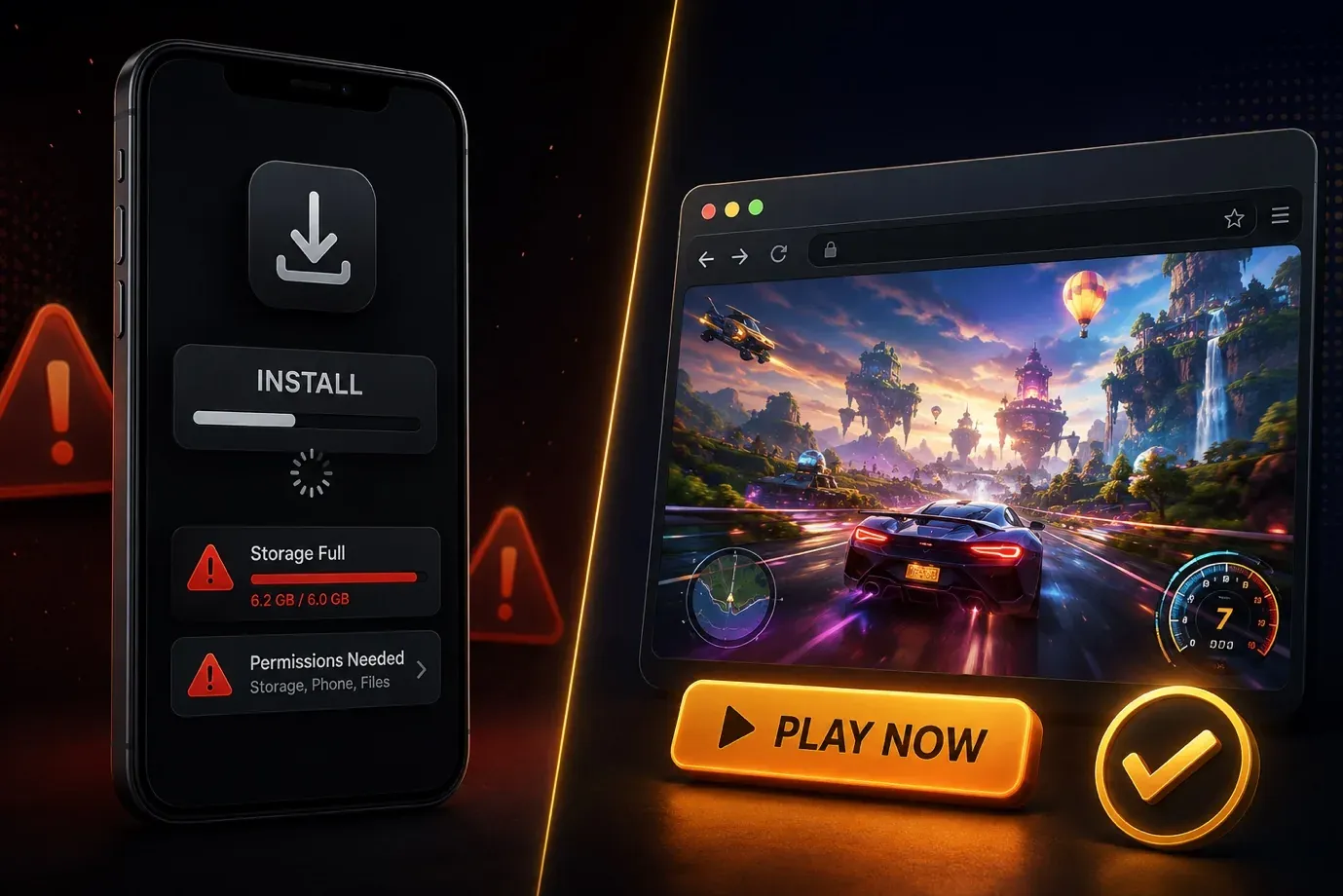
If you had told any gaming industry analyst five years ago that browser-based HTML5 games would be posting double-digit growth in 2026, they would have laughed you out of the room. The narrative was written and sealed: native mobile apps won, app stores are the only distribution that matters, and the browser was a relic of the Flash era, good for nothing but corporate intranets and old Flash emulators.
I was starting to believe it myself. Until I looked at our numbers.
At VPlay, we've been tracking player behavior across our 200+ game catalog for over a year now, and the trend is unmistakable. HTML5 browser games aren't just surviving — they're growing. And not by a little. We're seeing session counts climb month after month, return visitor rates that beat most mobile app benchmarks, and developers coming to us specifically asking to publish browser-first.
This isn't a nostalgia play. This isn't "retro cool." This is a quiet correction happening because the alternatives got worse, and the technology finally caught up.
The "Install" Tax Nobody Talks About
A few months back, I wrote about the most expensive button in gaming — that innocent-looking "Install" button on every app store page. The math is brutal. For every 100 players who click a link to a mobile game, only 20-30 will actually make it through the install process and open the app. The rest drop off somewhere between "storage full," "17 permissions required," "waiting on Wi-Fi," and the universal gamer's kryptonite: "I'll do it later."
That 70-80% drop-off isn't a theory. It's the reality of every mobile game launch in 2026.
Now compare that to a browser game. A player clicks a link. The page loads. They press play. That's the entire funnel. No commitments, no home screen clutter, no permission dialogs asking for access to their contacts and microphone. Zero friction.
When you're a player with exactly three minutes between meetings or on your commute, that difference isn't just convenient — it's the entire reason you play at all.
HTML5 Actually Got Good This Time
Let's be honest about the elephant in the room. The last time HTML5 games tried to have a moment, around 2014-2016, most of them were terrible. Laggy controls, potato graphics, audio that cut out randomly, and multiplayer that felt like sending telegrams. The promise was there, but the technology wasn't.
2026 is a different world.
Modern HTML5 games built with engines like Phaser 3 and Three.js are delivering near-native performance with WebGL graphics that would have required a desktop GPU five years ago. Real-time multiplayer works. Audio syncs perfectly. Touch controls on mobile feel responsive, not like you're tapping through molasses.
Browsers themselves have essentially become lightweight operating systems. Chrome, Safari, and Firefox can handle complex game loops, physics engines, and asset loading that would have choked entire desktops a decade ago. The gap between "browser game" and "native app" has shrunk to the point where most casual players can't tell the difference — and frankly, don't care.
Developers Are Voting With Their Code
Here at VPlay, we talk to indie developers every single day, and the message we're hearing is consistent: they're tired of the app store treadmill.
When I wrote about the hidden cost of app store discovery, I focused on the 30% cut that Apple and Google extract from every transaction. But there's a cost that's even harder to quantify: the loss of control.
Want to push a critical bug fix? Wait 3-7 days for review. Want to run a quick experiment with new game mechanics? Hope the algorithm doesn't punish you for changing your metadata. Want to reach players in a country where the app store has weird restrictions? Good luck.
Browser-first development eliminates all of that. Push an update, and it's live globally in seconds. Iterate on your game based on real player feedback without asking permission. Reach anyone with a browser — which is basically everyone with a phone — regardless of what app store they use.
For independent developers who just want to make games and get them to players, the browser is starting to look like freedom.
The Players Nobody Designs For
This comeback isn't being driven by the high-end gaming crowd with flagship phones and unlimited data. It's being driven by the players the industry usually ignores.
It's the student in a lecture hall with a school laptop that can't install anything. It's the office worker sneaking in a quick game during lunch on a work computer. It's the player in Lagos or Jakarta with a budget Android phone where every gigabyte of storage and data counts. It's the parent sharing a tablet with their kids who doesn't want a dozen random apps cluttering up the home screen.
These players don't want another app. They want to play a game. Right now. Without commitment.
That's the market HTML5 games are serving, and it's a much bigger market than most industry reports acknowledge.
This Isn't a War — It's an Expansion
Let me be clear about something. This isn't about browser games "killing" mobile apps. That's not going to happen. Deep, complex games that require full device capabilities will always be better as native apps. The AAA experience isn't coming to a browser tab anytime soon, and that's fine.
What's happening instead is an expansion of the gaming ecosystem. Browser games are reclaiming the entry point — that first touch, that casual session, that moment when someone discovers a new genre or developer they love. Some of those players will go on to download the native app for a deeper experience. Many won't, and that's okay too. They're still playing, still engaging, still part of the gaming community.
Platforms like VPlay are becoming what app stores used to be: a discovery layer where players can browse, try something new in seconds, and find their next favorite game without jumping through hoops.
The Quiet Comeback
The reason this comeback is "quiet" is that it's not being driven by press releases or keynote announcements. It's being driven by individual player choices, one click-to-play session at a time. It's developers quietly choosing browser-first because it gives them control. It's platforms like ours betting on a future where the web is playable again.
Five years from now, I don't think we'll be talking about HTML5 games "coming back." We'll just be talking about them as one of the normal ways people play games — alongside consoles, PCs, and mobile apps.
The browser was always meant to be a place where you could just jump in and play. For a while, we lost sight of that. Now it's coming back. And if you haven't tried a modern HTML5 game lately, you might be surprised at how good it's gotten.
Ready to see what the fuss is about? Jump into one of our top-rated browser games — no install required. Just click, and play.
Vivek is the tech head and gaming industry analyst at VPlay. He's been arguing that the web is underrated since 2012 and is very pleased to finally have data on his side.
More from the blog

Micro Drama and Mobile Games Are Converging, And Coins Are the Reason
There's a conversation that's been happening in gaming industry circles for the past year or so, mostly in podcast and newsletter form rather than splashy headlines, about a content category that didn
AI-Generated Game Art Is Everywhere Now. Here's What It's Actually Changing
Five takes on where AI-generated creative in gaming actually stands right now, not where the hype cycle wants it to stand.